
An upholstery boat seat can become one of the most noticeable signs of age on a boat. Even when the hull, engine, and other systems remain in good condition, worn seating can make the entire interior look tired. Cracked vinyl, faded surfaces, damaged seams, and compressed foam can also reduce comfort for everyone onboard. A carefully planned restoration can address these issues while giving an older vessel a cleaner and more modern interior. If you are considering professional marine upholstery work, you can explore services here from Boat Upholstery Broward, a company specializing in upholstery for boats and yachts.
Older Boats Often Need Interior Attention First
Boat owners do not always need to make major changes to improve an aging vessel.
In many cases, the interior creates the strongest impression of age. Years of sunlight, moisture, and regular use gradually affect seating surfaces, even when owners clean them regularly.
The most common signs include:
- Cracked or brittle vinyl
- Faded colors
- Loose stitching
- Flattened cushions
- Uneven seat surfaces
- Damaged piping
- Moisture inside cushions
Addressing these problems can make the interior feel considerably fresher without changing the boat’s basic design.
Look Beneath the Surface
Replacing the visible covering is only part of a successful restoration.
The foam beneath the upholstery provides much of the seat’s support. If it has become compressed or damaged by moisture, a new exterior covering may not solve the comfort problem.
A professional upholstery boat seat project should therefore consider the complete seating structure. Checking the foam, backing, seams, and cushion shape can help ensure that the finished result performs as well as it looks.
Choose Materials Designed for Marine Use
Marine seating experiences conditions that ordinary furniture does not.
UV radiation, water, salt, humidity, and repeated cleaning can all affect upholstery. Using materials designed for boats can help reduce premature deterioration.
When selecting materials, owners should consider:
- UV resistance
- Water resistance
- Mold and mildew resistance
- Color retention
- Surface durability
- Ease of maintenance
Marine-grade vinyl is a popular option because it combines practical performance with a wide selection of colors and textures.
Comfort Should Be Part of the Upgrade
A boat interior should not only look good. It should also feel comfortable during real use.
Owners who spend several hours cruising or fishing may notice problems with older cushions that are barely noticeable during a short trip. Weak foam can provide less support, while worn seat contours may contribute to discomfort.
An upholstery boat seat restoration creates an opportunity to improve cushioning and support at the same time as the exterior appearance.
Update the Style Without Losing Character
Restoring an older boat does not mean removing everything that makes it distinctive.
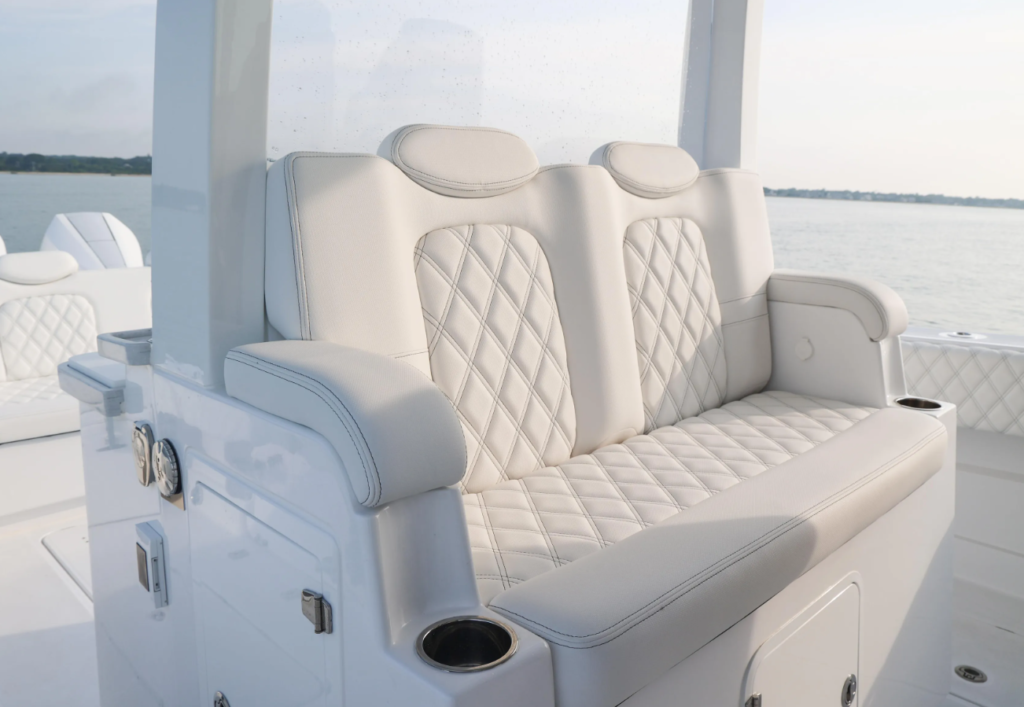
Owners can preserve the original layout while introducing updated colors, textures, or stitching. This approach can make a familiar vessel feel more contemporary without making the interior look completely different.
Some popular options include:
- Two-tone marine vinyl
- Contrasting piping
- Decorative stitching
- Textured surfaces
- Custom embroidery
- Coordinated seat cushions
The right combination can refresh the interior while maintaining its original character.
Focus on the Areas That Receive the Most Wear
Not every seat ages at the same rate.
Helm seats and cockpit seating often experience the most frequent use and the greatest exposure to sunlight. These areas may show damage sooner than protected seating inside a cabin.
During an upholstery boat seat project, owners can prioritize high-use areas while evaluating the rest of the interior. This can make the restoration more efficient and ensure that the most important seating receives appropriate attention.
Good Maintenance Extends the Results
A newly restored interior still needs regular care.
Salt, sunscreen, dirt, and moisture can accumulate quickly during normal boating. Removing these contaminants after each outing can help reduce long-term wear.
Useful habits include:
- Wiping seating after every trip
- Removing salt residue
- Drying wet cushions
- Cleaning spills quickly
- Inspecting seams regularly
- Using marine-safe cleaning products
Consistent maintenance can help new materials retain their appearance and comfort.
Proper Storage Protects Marine Seating
Storage conditions can have a major impact on upholstery.
When a boat remains outdoors, direct sunlight and rain can continue affecting exposed surfaces even when the vessel is not being used. A quality cover can reduce exposure and protect the interior.
However, ventilation also matters. Owners should avoid trapping moisture beneath covers or storing wet cushions for long periods.
Dry seating and adequate airflow can help reduce the risk of mildew and unpleasant odors.
Restoration Can Be a Smart Investment
Replacing an entire boat because of an aging interior may not always be necessary.
If the vessel remains mechanically sound, restoring its seating can provide a more practical way to improve the overall experience. An upholstery boat seat upgrade can transform the areas passengers interact with most while preserving the boat’s existing structure and performance.
For owners who have used the same vessel for years, this can also be a way to modernize the interior without giving up a boat they already know and enjoy.
Final Thoughts
An older boat can still provide an excellent experience when its interior receives the right attention. Seating plays a major role in comfort and appearance, making it one of the most valuable areas to consider during a restoration.
A professional upholstery boat seat project can replace worn materials, improve cushioning, modernize the design, and provide better protection against marine conditions. With quality materials and consistent care, an updated interior can help an older boat remain comfortable and attractive for many more seasons.